It started with a fantasy world I dreamt up at 11 and accidentally published as a novel at 14 — by convincing my parents I needed a gaming laptop to "type my book," then mostly gaming while faking enough progress that a real manuscript snuck out the other side. The book still reads exactly like a 14-year-old wrote it. The habit it tricked me into building never left, and three projects later I'm still making worlds — only now they have magic systems with consequences, factions that move whether anyone's watching, and a crown dream I haven't started yet.
The book I faked my way into
The honest version of the origin story is that I didn't decide to write a book. I dreamt up a fantasy world at 11, my friends liked the bits I told them, so I wrote more. Then I talked my "gullible" parents into a gaming laptop to type my book — and proceeded to play games for about three years, writing just often enough to keep the lie alive. The fake progress quietly compounded into thirty thousand words, which I then rewrote several times into something that actually held together. I picked fonts. I picked a cover. I held the first physical copy and there was nothing like seeing my own name on it.
Here is the part I keep, because it's the only part that's actually useful:
“Honestly, if I had just decided to write a book, I probably wouldn't have finished it. But because I had to fake progress, I accidentally built a real habit. Kinda makes me wonder—how many things could we actually finish if we just tricked ourselves into starting?”— How I accidentally wrote a book
That's not a writing lesson, it's a finishing lesson, and it's the through-line of everything I make. (The maker side of me has the opposite problem — start a hundred things, finish a few; see the Maker.) The book got a small life of its own: re-released cheaper for an Indian audience, some newspaper coverage, school book-signings where kids had me sign their hands and backs with their pens, a signed-copy exchange with Chetan Bhagat at a lit festival. A decade later someone DM'd me to say I was their childhood favorite author. Things like that are the actual reason I want to keep doing creative work.
And then the verdict I keep right next to all of that, because both are true at once. There was nothing like seeing my own name on a cover — and, in the same breath:
“Also don't recommend most people read it anyway, it still reads like it was written by a 14 year old — nowhere in the realm of those like Eragon.”— How I accidentally wrote a book
So the teen novel is the spark, not the brag. I won't even pretend I still profit from it — I lost the publisher account to a forgotten email-and-password, and the proceeds quietly go nowhere now. I find that funnier than I should. The point was never the book. The point was learning two things that have outlived it: that I could actually finish a long thing, and that finishing it would put me in a room with people I'd never otherwise have met. A book is a strange machine — you make it alone in a corner for years, and then it goes out and quietly collects strangers on your behalf. That second part is the part I'm still chasing.
The Swords of Darkness — the real project
The serious thing now is The Swords of Darkness (working alt-title Reverberation), aimed at roughly 150,000 words across 600 pages. It's a tragedy about a man who sets out to fight evil and becomes it, told from thirty years before the main series so you watch the fall in full. The one-line theme, the way I wrote it into the bible:
“Reverberating feelings of a man between evil and good. The journey from a victim of justice to the head of the Spirit Warriors to the murderer of the Spirit God himself.”— Plot Summary, Swords of Darkness
The protagonist, Zirus, starts as a blade master whose one flaw is the cleanest thing in the whole bible: blind trust in institutional justice. The theme I keep written on the wall is "justice is a tool, not a truth — you trust it too much," and the book's only job is to break that trust on his face. He's framed, imprisoned in the Duraga Dungeon, escapes under cover of a storm — and finds the swords abandoned at a campsite. After his first kill he despises himself, but some part of him takes pride in the victory, and the emotion shifts, gradually, from guilt to "they deserved it" to "this is fun." The reader is supposed to slide down that ramp with him and only notice halfway down. There's even a gamified beat I want the reader to enjoy against their better judgment — watching Zirus climb a criminal-ranking ladder from D-class up to S as the body count rises. He becomes a killer the world calls the Red Curse; then the Spirit Warriors take him in, redeem him, and raise him to their leader — right before the villain who can read and fuel and nullify emotions turns his own love, Aurelia, against him, and the whole thing collapses into grief, an apocalypse, and the murder of a corrupt god. It's morally dark on purpose, and it's a tragedy on purpose: an idealist who joins the institution that saves him, climbs to its top, and only then learns what it really is.
The world it lives in is genuinely built, not a single map and a vibe — its named places are the village of Kaelrin under the Skyfang Mountains, the Jukai Dojo, the Duraga Dungeon, the capital, and the burned village of Eldermoor. (One correction I have to make for anyone who saw an older write-up: "Wave Echo Cave" is not part of this world — that's a MacGuffin from my D&D campaign that got cross-wired into the novel once. Strike it.)
I should be honest about where it stands: there are three drafted chapters, a separate stylistic experiment in Patrick Rothfuss's voice, several alternate openers, and a full chapter-by-chapter map — real volume, not just an outline. The prose is competent and AI-assisted, with the tic-phrases and the occasional looping paragraph you'd expect from that; it's promising, not yet distinctive. The architecture is the part I'd actually defend. So I lead on the conceit, not the polish, and I'd rather you judge the machine than the paint.
Soul of the Slain — a magic system that costs something
The conceit I'm proudest of is the magic, because it's also the plot engine — the rules of the world are the reason Zirus falls:
“The souls of whoever the Alecreto Silver weapons slay are trapped in them and a part of their strength is transferred to the one who slayed them … which tends to make killing addictive.”— Plot Summary, Swords of Darkness
That's the engine. Every Spirit Warrior who wields Alecreto Silver has to overcome the high of "Soul of the Slain" before they're allowed on-field, because the kill feels like bits of your body being reborn. So whether Zirus is corrupted by the swords or by his own heart is left genuinely ambiguous — and that ambiguity is the book. The wider world runs on Spirit Fruits (guardians who, when slain, transform into a fruit that grants one person a power) and a Spirit God who turns out to have promised the council immortality in exchange for turning the world into "a regime of perfection — a prison." There's a line in there I'm fond of: "God must not be forgiving, for if all sinners are forgiven, then who is to refrain from sin?"
A lot of Zirus's mentor-philosophy reads, frankly, like me ventriloquizing through a fantasy hat — lines like "how strong you are is not a measure of how hard you can hit, but of how hard you can get hit and still remain standing," or his acceptance vow, "I am strong because I've been weak. I am fearless because I've been afraid. And I am wise, for I've been foolish." If you've read anything else on this site you can probably see whose voice that actually is. Worldbuilding and self-understanding tend to be the same material for me, and I've made my peace with that.
I also try hard not to do lazy worldbuilding. I start with vast, geographically honest maps and then grow culture and the flow of time on top — and there's a note in the folder, titled "hard trap," where I explicitly warn myself off environmental determinism: the lazy "this biome therefore this culture" shortcut. Real cultures are shaped by history, migration, colonialism, technology, and accident, not just by what grows nearby. And my favorite worldbuilding idea isn't a spell; it's that most magic in the world shouldn't work at all — snake oil, charms, curse tablets, healing stews, a mix of false belief, real science dressed up as magic, and a thin sliver of the genuinely magical. Religion mixes into it too, with only a small percent being real. The texture of a world, to me, is the stuff that's almost true — the superstitions a real person would carry without ever knowing which of them held. I even catch myself trying to anchor the fantasy lines in real logic: a cave inscription about light failing and "the darkness inheriting its will" got a note-to-self rationalizing it through how night vision evolves in animals that live where light never reaches. That's probably overkill. I do it anyway.
- ~150k-word / 600-page target; three drafted chapters plus a full 17-chapter, ~80k-word three-act map with per-chapter word counts
- An original, consequence-bearing magic system (Alecreto Silver + "Soul of the Slain") where the mechanic is the protagonist's downfall
- A documented multi-model drafting process — I iterate plot through successive AI passes and keep each one, then overrule the model when it's wrong
- Studied, not winged: Brandon Sanderson's lectures, the Writing Excuses podcast, a Rothfuss-pastiche draft to try on a master's prose
The sequel that was planted decades early
The series plan is Book 0, "Dawn of Darkness" (Zirus's fall) into Book 1, "Appearance of the Krito." Here's the bit of long-game I genuinely love. At the climax of Book 0, Zirus deflects the Spirit God's lightning with one sword and leaves a teeny-tiny crack in the blade. Decades later, in Book 1, a young warrior named Ichiro strikes the one crack in that same sword — freeing the god trapped inside and, in doing so, redeeming the man Zirus used to be (he forgets his own name when he becomes the Evil Soul, and remembers it again only when Ichiro pulls the god back out of him). One throwaway crack in Book 0 is the entire win condition of Book 1. Setting up a payoff a whole book early is the kind of thing that makes the work feel less like writing and more like building a machine that goes off later.
That's also where my actual craft rules live. The big one:
“The only way to make characters or plot immediately compelling is invoke strong emotions in the reader — certain emotions are more easily invoked than others, like disgust or discomfort or rage.”— Tips and Notes, Swords of Darkness
The corollaries: don't kill off good characters too freely (do it sparingly, to show real danger — otherwise the survivors feel flat next to the dead ones you spent all your time building); write dialogue with movement and small action instead of an endless "he said / she said"; and the one I try to live by even though it fights every outline I make — find the best openings of books, build an incredible opening first, and grow the plot around it rather than starting from a plot and bolting an opening on. A strong opener that invokes real emotion immediately is worth more than a tidy structure, and it's the rule I'm worst at obeying. I have a stack of alternate first chapters to prove it.
D&D as the storytelling lab
The other place I build worlds is the table. I run a heavily homebrewed Lost Mines of Phandelver campaign — multi-year, multiple line-ups of friends — and across all of it I've written it into an actual playbook. The systems side (factions, loyalty trees, combat-as-puzzle, the house rules) properly belongs on Games & the Table; here I care about the storytelling half, because DMing is the same muscle as the novel — find where the common wisdom is wrong, build the better version, write the method down.
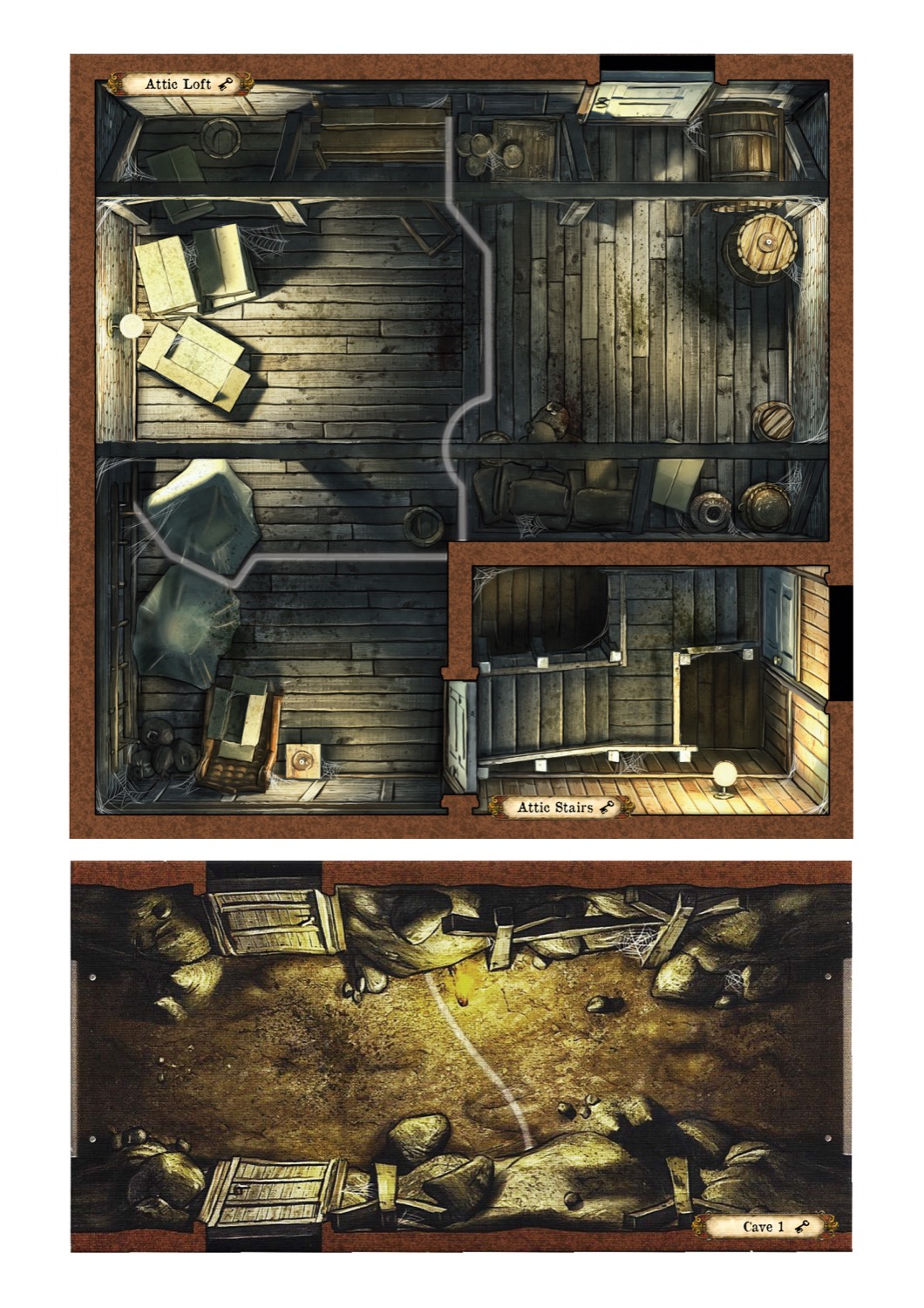
The load-bearing idea is the Three-Faction Rule: every conflict is Good, Bad, and a neutral Ugly that holds the balance — and crucially, Good starts out losing.
“Bad beats Good unless Good can win over — or neutralize — the Ugly faction … If the two big sides start evenly matched, you're really telling players the adventure hasn't begun yet.”— Better Factions and Politics in DnD
The trick is that three factions is a lens, not a limit — you can fractal it down, factions inside factions, until the politics feel real. Underneath that, every NPC needs something specific they're doing right now, today, that they'd keep doing if the players never showed up — which is just my whole worldbuilding belief in miniature: the world has to be moving on its own before anyone walks into it. My motto for a running campaign is on the wall of the design doc — "everything should always be going wrong in interesting ways even when it goes right." In practice that means a Redbrand gang the party turned into a town guard quietly grows into a thirty-person militia that's outgrown their control, a "magic" hat that's actually just a +1 to charisma because it looks good, and consequences that compound whether anyone planned them.
The reason this matters for the writing is that I treat combat and conflict at the table the way I want stakes to feel on the page. Action by itself bores me — good action is good drama, and a fight should secretly be a puzzle whose solution is hidden in the players' own abilities. I learned that partly by watching anime critically: some Demon Slayer and Jujutsu Kaisen fights have gorgeous animation and go completely flat because the stakes weren't set up, while the Naruto Pain fight is, to me, a master class in using a huge cast and letting characters actually die. The same painter's instinct to imply detail rather than dump it, the same allergy to fake stakes — all of it feeds back into the prose. The table is where I get to test story craft live, on people who'll tell me the instant it's boring, which is a luxury a manuscript never gives you.
The crown dream: make a manga, not read one
The far thread — the one a collaborator could most easily pull me into — is a manga or webcomic. The pitch, in my own goal-system words:
“Write a Manga/Webcomic (next death note or GoT → complex plot but easy to follow, high IQ decisions by many characters) (can write as a movie script first so easily adaptable to show or comic or even a book).”— Monthly Goals Calendar
"Complex but easy to follow, high-IQ decisions by many characters" isn't a vibe — it's my actual theory of story, reverse-engineered from years of watching only the best things critically. Real (lethal) stakes, tight pacing, almost no exposition, a committed tone, and a large cast where every character is worth their page. It's the positive statement of everything I praise and everything I dock points for. And the plan is deliberate: write it as a script first, so the same story can become a comic, a show, or a book without starting over.
One honest contradiction worth naming: I want to make manga, but I don't especially love reading the medium — One Piece aside, I usually prefer the anime adaptations. My interest is the storytelling and the adaptable IP, not the fandom. So I'm not coming at this as an otaku; I'm coming at it as someone who wants to build the kind of plot machine I admire.
The hinge between this dream and my day job is a tool I designed called StoryWeb — a "Cursor for writers." Managing complex plot webs, character arcs, and worldbuilding details is genuinely hard and the existing tools are clunky, so I spec'd an infinitely-zoomable card board with a relationship graph that diffs across time like git, so you can see exactly how the plot evolved chapter to chapter.
“Inspired by clean architecture in coding: structure and flexibility coexist … Cursor-for-writers metaphor: AI/context-aware, powerful, but never in the way.”— Story Writing Organizer (StoryWeb)
It's the cleanest proof I have that my writer-self and my engineer-self are the same self — which is the whole argument of the Maker.
What I've made and what I want to make
What I've made
A published novel (origin, not a brag). Three drafted chapters, multiple alternate openers, and a full 80k-word chapter map of The Swords of Darkness, on an original magic system. A multi-year homebrew D&D campaign with a written storytelling playbook (the Three-Faction Rule, faction loyalty, a world that moves on its own). StoryWeb, spec'd in full.
What I want to make
Finish The Swords of Darkness — the bottleneck is finishing, and I know it. Then the crown dream: a manga/webcomic written script-first so it can become a comic, a show, or a book — "the next Death Note or Game of Thrones," complex but legible. And StoryWeb built for real, so the next world is easier to hold in my head than this one was.
If you write, or world-build, or run a table — or you just want to take a magic system apart and see what makes it tick — say hi. The best stories I've made all started as a conversation with someone who pushed back.