Game design is just systems-thinking you can play. It's the same itch as the apps and the D&D frameworks below: take a system apart, find where the fun actually lives, and build it back better. This is the part of me that's a player and a designer — sometimes in the same breath, which is the problem and also the whole point.
The one belief underneath all of it
There's a law of game design I've never been able to unsee, from Soren Johnson: given the opportunity, players will optimize the fun out of a game. I believe it because I am that player. I'm the guy who hoards the healing item until the credits roll. So I added my own corollary, and it's become the thing I judge every design against:
“any time that the best strategy is not the most fun strategy, I believe, is a failure of the game's design.”— from my consumables essay
That's the lens for everything here. Good design isn't about adding more choices — it's about protecting the player from their own urge to optimize, so the fun strategy and the smart strategy are the same move. The work, in dice or on a board or behind a screen, is closing that gap.
The consumables problem (the essay I'm proudest of)
The clearest example I've found is a fifty-year-old, unsolved design flaw: consumables players hoard and never use. I traced it back to the food rations in Oregon Trail. I have lived it in nearly every game I love. In Elden Ring I never once used a damage buff on a boss, because losing the attempt felt like wasting the item:
“WHO is this item for? When is this even meant to be used? … I'll just figure out how to use this later only to never ever use it for the rest of the game.”— on Elden Ring buffs
Same story in the Witcher 3, one of my all-time favorites — I adored the blade-oil system on paper and never oiled a blade. In Prey on the hardest difficulty I tested the recycler charge, hoarded it, finally spent it, and found it basically useless, so I save-scummed past enemies instead. In Sekiro I'd heard firecrackers wreck animal enemies, and I just kept saving them. Souls-likes quietly solved this years ago by refilling your potions every time you rest or die — but most games never noticed the bug.
Then Silksong fixed it with one tiny move: a hard cap on its shards, plus a clear signal you'll keep earning more. Suddenly I was comfortable spending a consumable. That's the whole insight. A cap plus a resupply signal is, in my words:
“[the cap on consumables is] to help players help themselves have fun, or protect the players from their own need to optimize.”— the consumables essay
NakeyJakey had made a video about the same itch — it made me feel heard — but I'm a little proud I found the cap mechanic as the fix, which his didn't name. That essay (drafts, a shot list, the researched history) is the most complete thing I've written about design, and it's the truest sample of how my head works: notice the bug nobody calls a bug, then find the smallest move that solves it.
Balatro, but with dice
Balatro proved roguelike deckbuilders are magic — you build a scoring engine out of nothing and every run surprises you. So I'm designing what happens when you do that to dice, where you can't control a roll the way you control a draw, and the randomness stays honest the whole way down. My one-line verdict in my own notes:
“Actually great idea, easy to execute and polish.”— my read on the dice roguelike
I did the recon before falling in love with it. There are already a few Farkle roguelites out there — Dice with Death, Dicealot, Dice Gambit — and their execution is, at a glance, rough. That's not a reason to quit; it's a market gap I think I can out-polish. The build borrows Kingdom Come: Deliverance 2's weighted-dice system (I worked through its full die-probability table, because the EV is the game) and bolts Balatro's build-an-engine structure on top. The plan is a quick web prototype with three.js dice rolling and basic AI, then unlockable special dice. The monetization is honest and boring: ship it on Steam. And the flavor I can't let go of —
“Henry gets dirtier… where the filthiest version of Henry is the hardest boss to defeat cos all he does is fucking play dice.”— KCD2 dice notes
Kuzure — the board game that's nearly pitch-ready
The most fleshed-out physical design I have started, like a lot of my best ideas, as a complaint. Jenga is a game about preserving a tower; I wanted the opposite — an adversarial stacking game where you place blocks to sabotage the next player. The pitch I'd open a video with:
“Jenga is the worst game ever made — so I fixed it.”— the Kuzure pitch
What I like about it is that the design is about feel, not just rules. The tower persists across rounds, so the thing you're playing on is built up over a whole night. A "block lives" system means eliminated players aren't stuck watching — and a 30-point notepad life-cap for competitive play does something I'm quietly happy about: beginners drop a lot of blocks early and don't care, but once they've burned through 15 of their 30, they suddenly start trying. The aesthetic is brutalist architecture — ash black and slate gray — and the website has a gallery where players upvote their most absurd builds, because some of these towers genuinely deserve to be displayed.
It's also where my marketing-before-building instinct shows. I got real feedback before committing: posted an early version, learned the working title collided with an existing video game, and ran a whole naming brainstorm. The shortlist that survived was Kuzure ("collapse"), Monolith, and Brutalist. Go-to-market is a demo video, a livestreamed play session, and a Kickstarter after the demo proves the fun is real.
- A complete board-game design — persistent tower, block-lives, a 30-point competitive cap, a chess-clock 1v1 mode, color-coded pieces that double as brand identity
- Real-world iteration: shipped it for feedback, hit a naming collision, ran the rename, landed on Kuzure
- A go-to-market plan that ends at Kickstarter — not a vibe, a sequence
My rule: thumbnail first
If there's one process habit I'd defend, it's that I package before I build. It's pasted at the very top of my game-ideas file in shouting caps:
“GO THUMBNAIL FIRST LIKE YT — make a steam page and an appealing visual.”— my own design-process rule
A Steam page is a YouTube thumbnail is a book cover: it's the promise, and if you can't make the promise compelling in one frame, the game underneath probably isn't either. So before I write much code I make the visual that has to sell it. That instinct scales past one game — I've got a plan to publish ten reskinned, beautifully-made board and card games in India under one brand, with a free digital copy in every physical box so fans recruit their friends, seeded into board-game cafés in the big cities with display posters and a real getting-started handbook. There's even a kids' sub-line in there — a math-ified Snakes & Ladders built so children teach each other. Whether that one ever ships, the discipline behind it is the same as everything on the Maker page: the bottleneck is almost never the idea. It's me, finishing.
The backlog, and a confession about choice
Behind the two designs I'd actually defend is a much longer list — roughly twenty-eight video-game concepts, ranked and named the same compulsive way I rank everything. Some I'd build tomorrow: a horse-racing game that's gambling-with-strategy, a deliberately cynical "Gambler's Dream — All Fallacies Come True," a multiplayer stealth game where you mask yourself with afterimages and mimicked sounds instead of dropping coins (cross my heart, the model is Hunt: Showdown's sound design), a poker game where you learn to read each AI opponent's facial tells. Most of them will stay names in a file, and I know that — but the ranking itself is the useful part. The discipline isn't having ideas; it's knowing which two are worth a year of your one life.
I should also confess the bug in me as a player, because it's the same bug my designs keep trying to fix. I once bought a 300-game Steam library on sales and let it paralyze me — owning everything killed my appreciation for anything. So I did the on-brand thing and built a tiny mood-based "game picker" to solve my own indecision, sorting by craving — Chill versus Intense — instead of genre. The real fix was smaller and harder: I let go of the idea of finishing my backlog entirely. I'd rather play a tiny fraction of it and actually connect with those few. That's the consumables problem again, just pointed at a Steam library instead of a healing potion.
D&D, where every system I love converges
I've run a homebrewed Lost Mines of Phandelver campaign for years — dated session logs from 2023 and 2024, a real working binder of NPC dossiers and reworked locations going back to 2022. I don't treat D&D as an escape from systems-thinking; it's the purest place I do it. It's the hub where everything else I'm into shows up at once: probability, anime fight pacing, teaching, a painter's eye, and — most of all — the reason any of this exists, which is getting people around a table together.
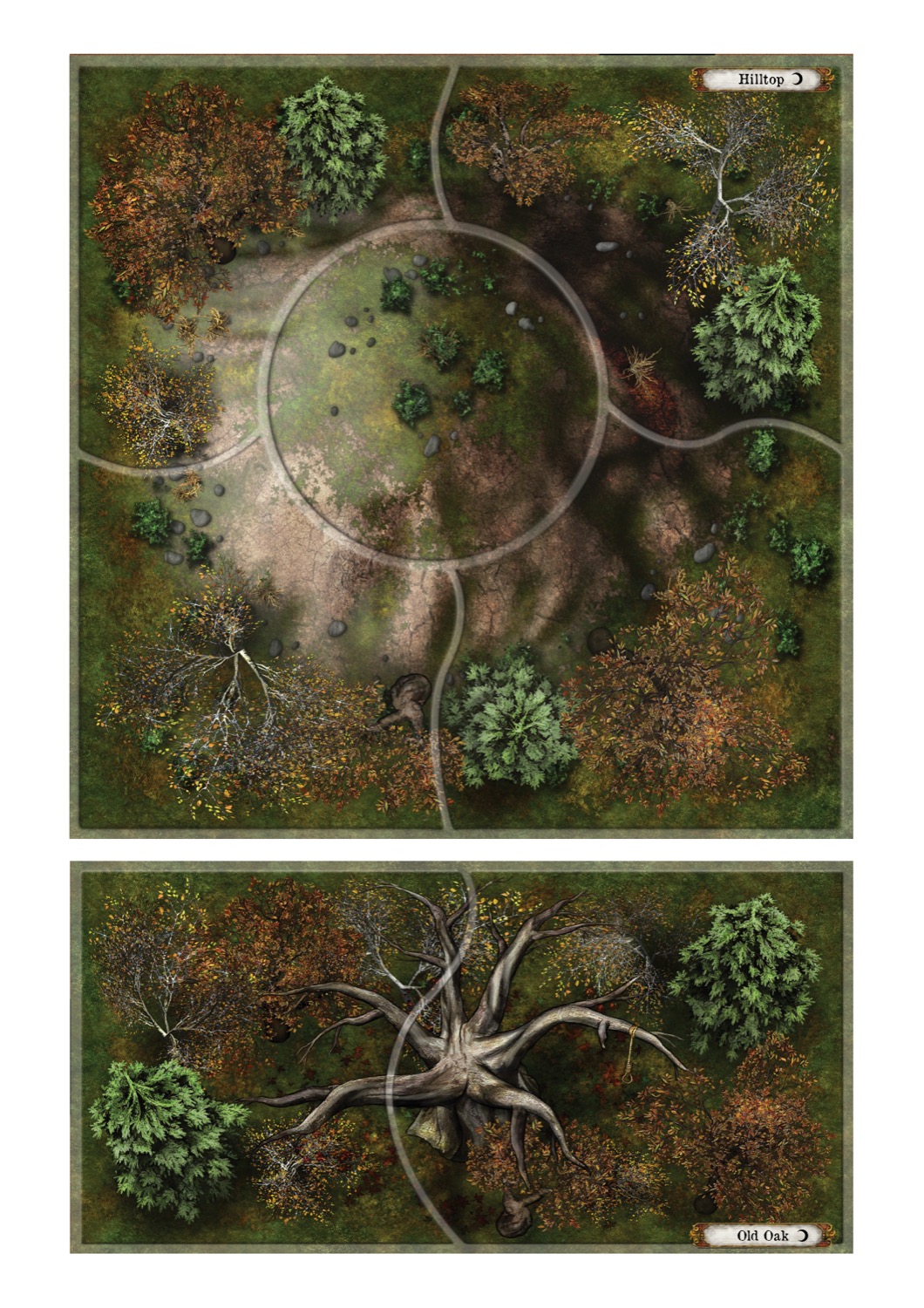
My playbook is, embarrassingly, a series of design essays — a "Better X in D&D" suite on factions, NPCs, travel, cities, combat. The spine of all of it is one heresy about combat:
“Action is boring. Good action is actually good drama and story revolving around the stakes of the action.”— my Golden Rules
Which becomes the rule I actually run by:
“Every combat should secretly be a puzzle to solve, with the players abilities providing possible solution… Combat should be rare and peak.”— my Golden Rules
You can see the systems brain everywhere in the binder. I roll 2d6 instead of 1d20 on random tables so the odds form a bell curve — a 7 is a normal event, a 2 hands the players a friendly blessing, a 12 drops a dragon on them — because a flat distribution wastes the interesting outcomes. I tune monster HP and a ranger's stats around the actual party composition. I hide certain rolls from players entirely, except on a natural 1, because a 2 or a 5 should just feel like you genuinely can't tell if he's lying. It's EV and information design wearing a fantasy hat. The narrative half of all this — the worlds, the villains, the tragedy structure — lives over on Worlds & Stories; this page is the machine the stories run on.
The other rule I hold onto is that the world has to keep moving without the players. My note for it reads:
“Everything should always be going wrong in interesting ways even when it goes right.”— my campaign-design note
In practice that means the published module gets torn down and rebuilt. I gave the villain Glasstaff an "all-seeing" gimmick so his henchmen believe he's omniscient; I rewrote the dungeon's Nothic into a tragic ex-wizard called Whisperclaw with a trust-leveled dialogue tree; I reworked a banshee into a betrayed elven diviner with a whole dreamscape sequence. And I let consequences compound: a band of bandits the party recruited as a makeshift town guard quietly grew into a 30-person militia that outgrew their control, which was never on any prep sheet — it just kept chugging. Even the throwaway monsters get pathos. There's a bullied goblin in my notes named Droop whose whole arc is hoping he might one day find real friends, "not like them." That's the part of design I can't switch off: I'd rather a goblin you kill in four seconds have a reason to exist than be a stat block.
And I try to keep myself honest about it. I critique the published module I'm running ("written as below but seems very combat heavy and boring"), I've diagnosed my own table's roleplay as "shallow and clunky because our characters are shallow," and one of my favorite teaching one-shots — Probability Dungeons, where the dungeon rooms are math problems and the loot scales with the EV you can calculate — is abandoned at Problem 2. That last one is the pattern, not the exception. The design is good. The finishing is the work.
Rocket League, and the 2,000 hours I'd take back
I'm a real player under all the theory, and the cleanest evidence is also the one I'm most conflicted about: I hit Grand Champion in Rocket League over nearly two thousand hours. I describe the game itself as:
“A love letter to a game I spent nearly 2000hrs on before breaking up with it.”— my Rocket League essay
I want to be honest about the cost, because the rank isn't the interesting part — the regret is:
“for comparison if I sang for that long I'd be a professional singer so the opportunity cost was insurmountably terrible.”— on the 2,000 hours
I'll even concede the punchline on myself —
“Watched 5,000+ hours of competitive gaming content and hit Grand Champion in Rocket League along the way, because apparently even my leisure has to be optimized.”— on how I got there
There's a real method buried in those hours, to be fair to them. Climbing in Rocket League taught me to treat improvement as an engineering problem: a tight reinforcement loop, framerate as noise you minimize, camera settings as spatial geometry you solve once and never touch — because changing your setup mid-climb is guaranteed self-sabotage. That's the same 30-day-sprint engine I point at everything else; competitive play just happened to be where I sharpened it.
But I'm not a grinder by identity, and I've made my peace with not chasing ranks anymore. What I actually love is the feeling of a difficulty curve I have to figure out — which is also why I'll happily bump a simple shooter to its hardest setting on a controller I'm bad with, just to turn it into a tense strategy game. My favorites give me that honestly: the Witcher 3, Elden Ring, Sekiro, Hollow Knight, Outer Wilds, Noita, Darkest Dungeon, FTL, Balatro. The skill transferred to other things; the hours mostly didn't. I'd rather say that out loud than pretend the GC badge is a clean win.
The 40+ board games I can't get to
Here's the part of this page that isn't a project. I owned more than forty board games, each of which I had sleeved by hand. When I had to leave the US on about a week's notice, I could fly out with two suitcases. Everything else went into a 5×5 storage locker in New York.
“my collection of 40+ board games each of which I had sleeved by hand … all went into storage somewhere in new york, locked away to be taken out some day some time. With no visa to come back there.”— from a journal note
They're still there. So are the painted minis and the D&D gear — the whole physical, around-a-table side of this hobby is the part I most want back, and the part I currently can't reach. I lost some appreciation for games at the height of having everything, when each new title became a tech demo I dropped after thirty minutes and I "forgot the magic of games." I got it back, oddly, by losing almost all of it — forced down to five games on a dying laptop, I lost myself in Metro Exodus the way I hadn't since I was a kid replaying the start of Arkham Asylum because the pirated copy couldn't save. Scarcity, it turns out, is a mechanic too. But I'd still really like the boxes back.
What I've made & what I want to make
What I've made & played
A dice roguelike in design with real market recon; Kuzure, a near-pitch-ready board game with a rename and a Kickstarter plan; a written body of D&D and game-design theory (the consumables essay, the Golden Rules, the "Better X" suite); a multi-year homebrew campaign; Grand Champion in Rocket League, regret included.
What I want to make
One genuinely great video game — the dice roguelike is the most likely first ship. Get Kuzure to a Kickstarter. Make Westworld real as a game you can live inside. Build the D&D live-assistant that surfaces the right rule the instant a DM needs it. And, most of all, get my board games out of that storage unit and find a table of serious players for them.
The honest counterweight runs through all of it: my insight reliably outruns my follow-through — I have a finished consumables thesis and an abandoned Problem 2, a complete board game and a list of prototypes I haven't shipped. The actual game I'm playing isn't getting better at starting. It's getting better at finishing. Easier with someone across the table.
If any of this is your kind of system to take apart — the dice game, the board game, a campaign, or just a strong opinion about why your favorite game's best item is the one nobody ever uses — say hi. The best designs I've got started as an argument with somebody.